
Faith leaders representing nine major religious traditions gathered at Westminster Cathedral Hall for a landmark interfaith event dedicated to prayer, dialogue, friendship and a shared commitment to peace in an increasingly divided world.
Hosted by the Catholic Bishops' Conference of England and Wales, the gatherings over the two days (Oct 17-18, 2026) brought together communities and senior Christian, Jewish, Muslim, Hindu, Sikh, Buddhist, Jain, Bahá'í and Zoroastrian leaders, who offered prayers and reflections on peace, justice, compassion and shared responsibility.
The event commemorated the enduring legacy of the historic 1986 World Day of Prayer for Peace in Assisi, convened by the Pope St John Paul II, which brought together faith leaders from around the world in a spirit of mutual respect and common purpose.
Welcoming participants, Cardinal Vincent Nichols, retired Archbishop of Westminster, described the gathering as an opportunity to deepen relationships across faith traditions while working together for the common good.
"We come together with great respect for one another's traditions and for the good of the world that has been given to us. Peace is built when people of faith work, witness and serve together."
The gathering was honoured by the presence of Cardinal George Jacob Koovakad, Prefect of the Dicastery for Interreligious Dialogue, who conveyed the greetings and encouragement of Pope Leo XIV and highlighted the vital role of faith communities in promoting peace, human dignity and solidarity.
Cardinal Koovakad emphasised that authentic religion must be a source of reconciliation rather than conflict. "Peace begins by recognising the dignity of every human person. Dialogue, friendship and cooperation between religious communities remain essential pathways to a more just and peaceful world."
The event also featured a recorded message from Cardinal Kurt Koch, who called on faith communities to stand together against antisemitism, anti-Christian persecution, hatred, extremism and violence, while defending the dignity and rights of all people.
Prayer, Dialogue and a Shared Commitment to Peace
A central theme throughout the events held over two days, was the conviction that prayer and dialogue are not alternatives to action but the foundation from which meaningful peacebuilding emerges.
Participants reflected on the continuing relevance of the "Spirit of Assisi", where people of different faiths come together, not by ignoring their differences, but by respecting them while committing themselves to the pursuit of peace.
A keynote reflection explored how lasting peace is built through what Pope Francis has called a "culture of encounter", encouraging communities to move beyond fear, hostility and suspicion in order to foster understanding, trust and cooperation.
Drawing on the historic meeting between St Francis of Assisi and Sultan Al-Malik al-Kamil in 1219, speakers highlighted the importance of courageous dialogue that steps beyond familiar boundaries and creates space for genuine encounter.
In a particularly moving address, a senior Jewish leader Dayan Eliezer Zobin reflected on the Jewish understanding of shalom as wholeness, right relationship and reconciliation. Acknowledging the suffering caused by contemporary conflicts, he urged communities to recognise one another's humanity and actively cultivate understanding and trust.
The gathering also heard from Revd Dr Nathan Eddy, Co-Director of the Council of Christians and Jews, who reflected on the remarkable progress in Christian-Jewish relations and called for continued collaboration in the face of rising antisemitism, religious hatred and social division.
Pledge for Peace
The highlight of the gathering was the signing of a Peace Pledge by representatives of the participating faith traditions. The pledge commits faith communities to:
Reject violence, terrorism, extremism and the misuse of religion.
Promote mutual respect, understanding and friendship.
Defend the dignity, rights and freedoms of every person.
Support those affected by war, persecution, discrimination and injustice.
Strengthen a culture of encounter through dialogue and cooperation.
Work together for social cohesion, environmental responsibility and the common good.
Educate future generations in peacebuilding and respectful citizenship
Build stronger relationships across religious, cultural and ethnic boundaries.
The pledge affirmed the shared belief that peace cannot be achieved by force alone but must be nurtured through dialogue, solidarity, justice, compassion and recognition of our common humanity. Full text of the Pledge can be found here: https://www.cbcew.org.uk/vatican-cardinal-and-religious-leaders-sign-pledge-for-peace-in-london/
A Call to Carry the Message Forward
Closing the gathering, Archbishop Bernard Longley reminded participants that the signing of the pledge represented more than a ceremonial moment.
"The signing of this peace pledge is not only an event in which we participate. It is an invitation to take its message into the communities we serve and to continue building understanding, friendship and peace."
Cardinal Nichols echoed this call, encouraging participants to ensure that peace becomes more than an aspiration. "Peace must become more than words. It must be seen in our lives, relationships and actions."
Following a period of silent prayer, participants gathered for fellowship and conversation, reinforcing the relationships that continue to sustain interfaith cooperation across the United Kingdom.
After the event, Revd Phil Horner, Chair of GRASSROOTS Luton, said, “At a time of global conflict, rising social tensions and growing polarisation, the gathering served as a powerful witness to the conviction shared by all different faith communities that working together in mutual respect, can be a force for peace, reconciliation and hope.”
For more info, please visit these links:
https://www.cbcew.org.uk/vatican-cardinal-and-religious-leaders-sign-pledge-for-peace-in-london/
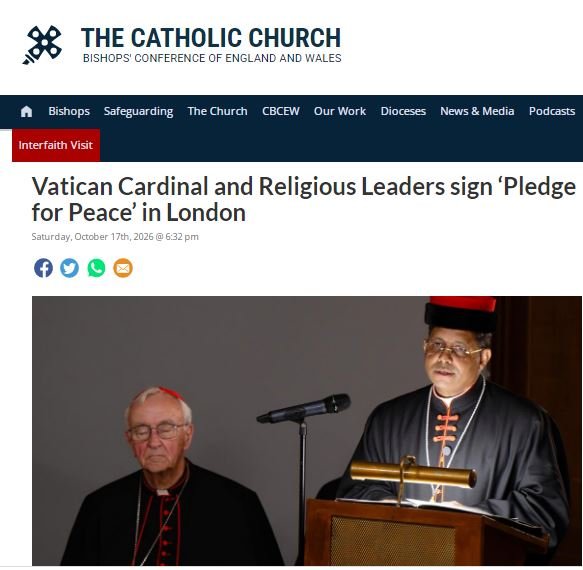
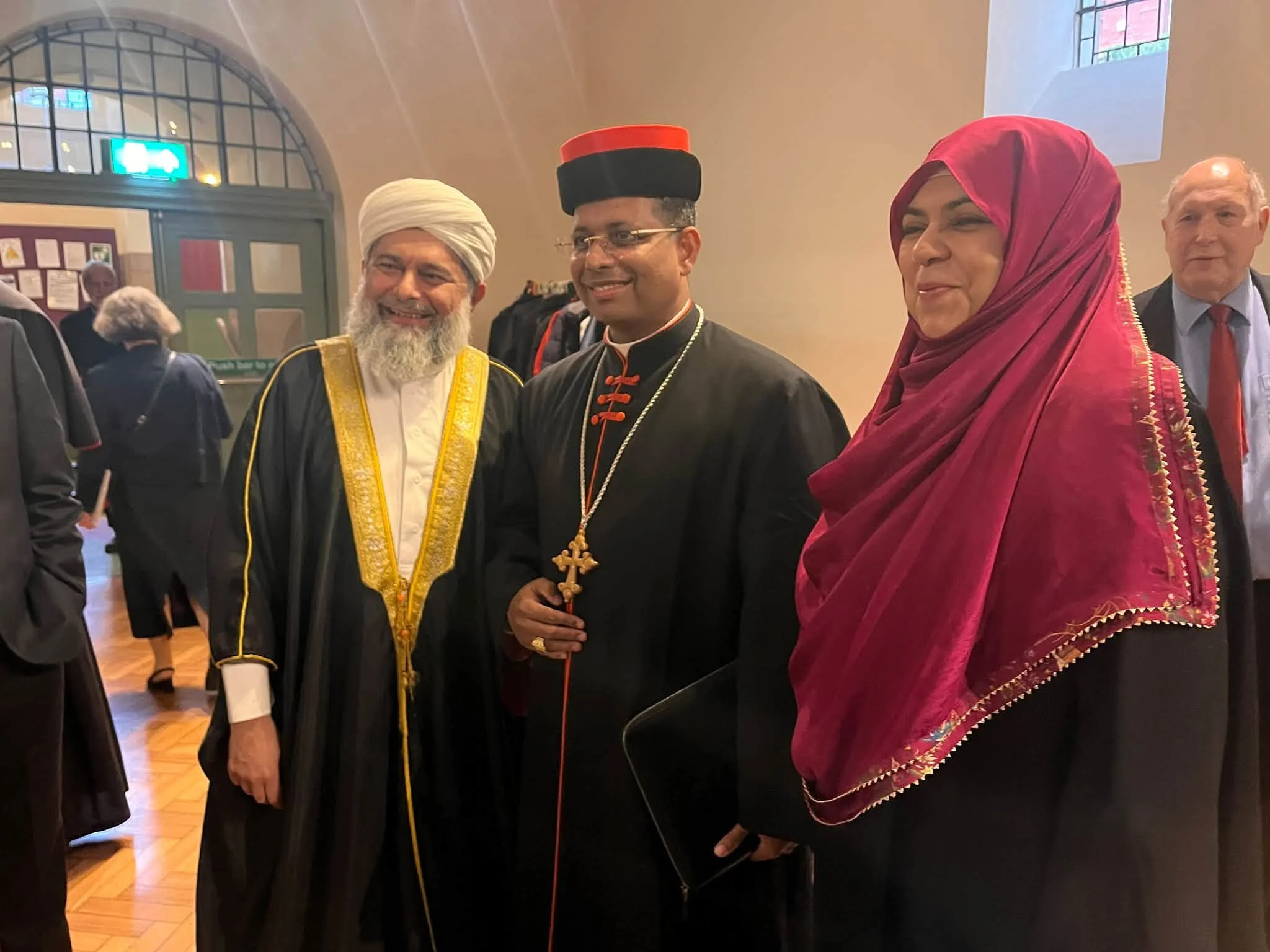
The gathering of different faith leaders was honoured by the presence of Cardinal George Jacob Koovakad, Prefect of the Dicastery for Interreligious Dialogue
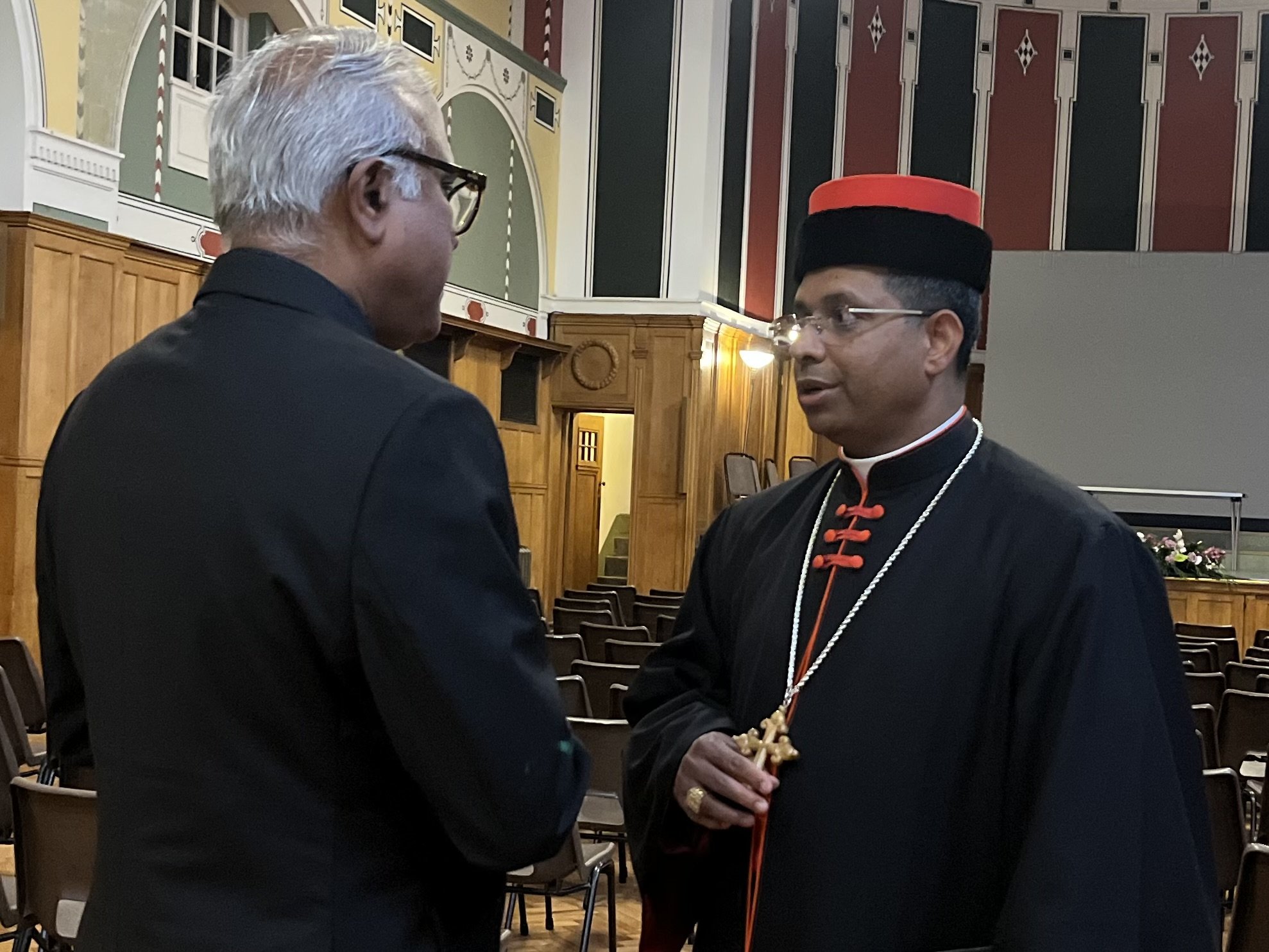
The gathering of different faith leaders was honoured by the presence of Cardinal George Jacob Koovakad, Prefect of the Dicastery for Interreligious Dialogue
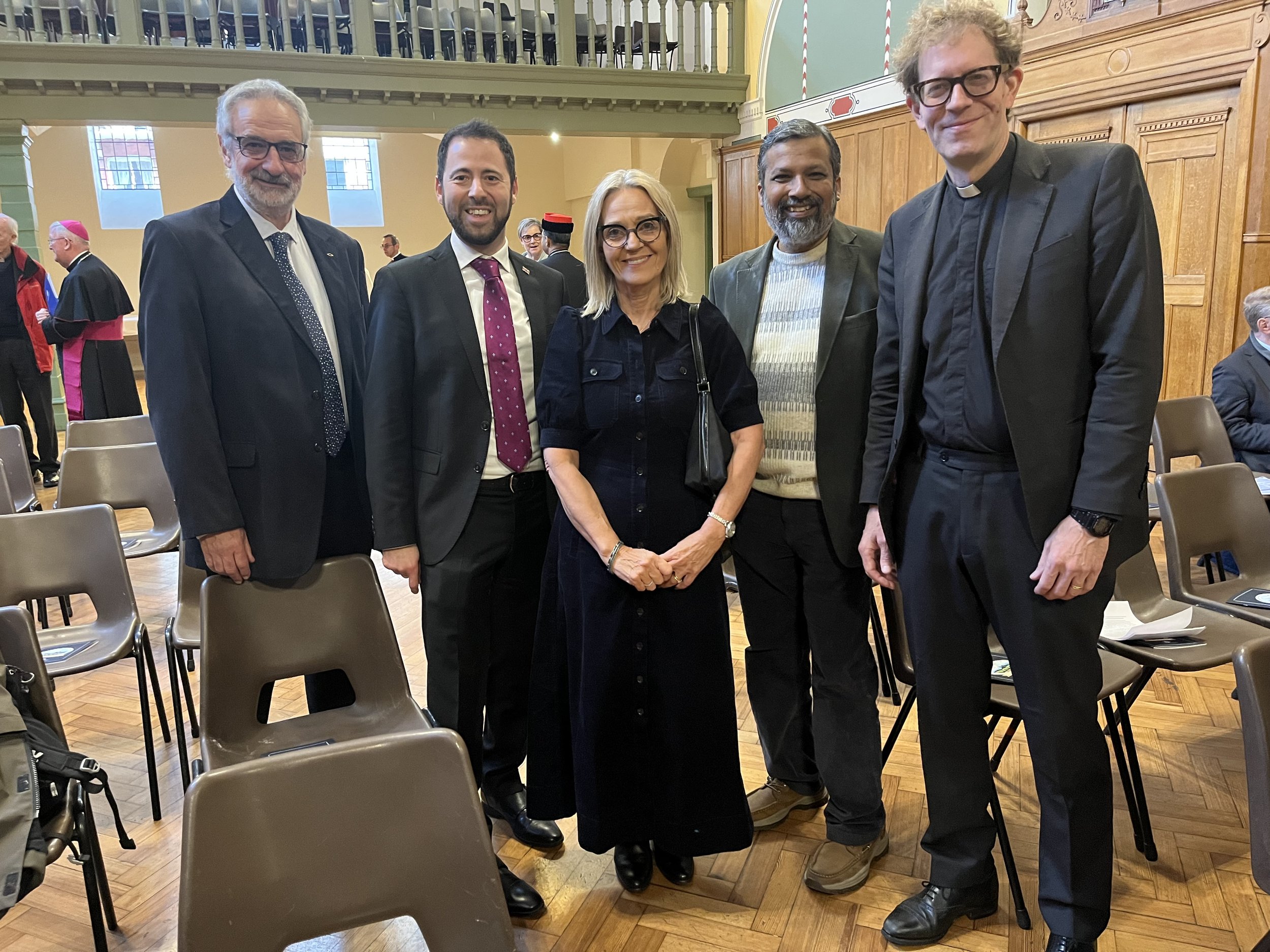
L to R: Revd Phil Horner, Chair of GRASSROOTS Luton, President of the Board of Deputies of British Jews, Phil Rosenberg, the Founder of Mitzvah Day, Laura Marks CBE (centre), David Jonathan, Direcor of GRASSROOTS Luton, and the Co-Director of Council of Christians and Jews, Nathan Eddy
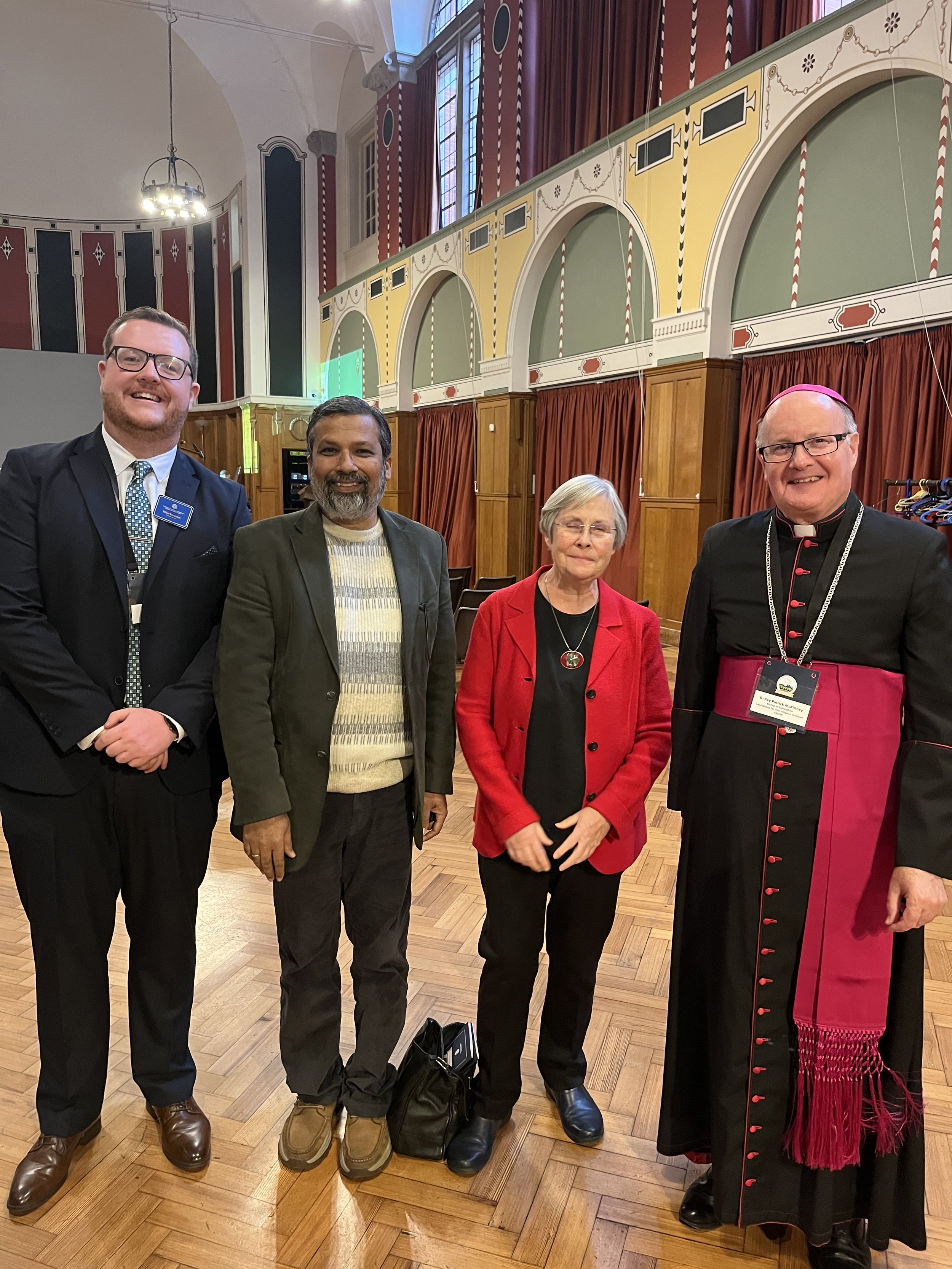
L to R: Elliot Vanstone, Mission Adviser for the Catholic Bishops' Conference of England and Wales, David Jonathan, Direcor of GRASSROOTS Luton, Patricia Whitney, Chair, Birmingham Faith Leaders Group and Bishop Patrick McKinney, the Lead Bishop for Interreligious Dialogue for the Catholic Bishops' Conference
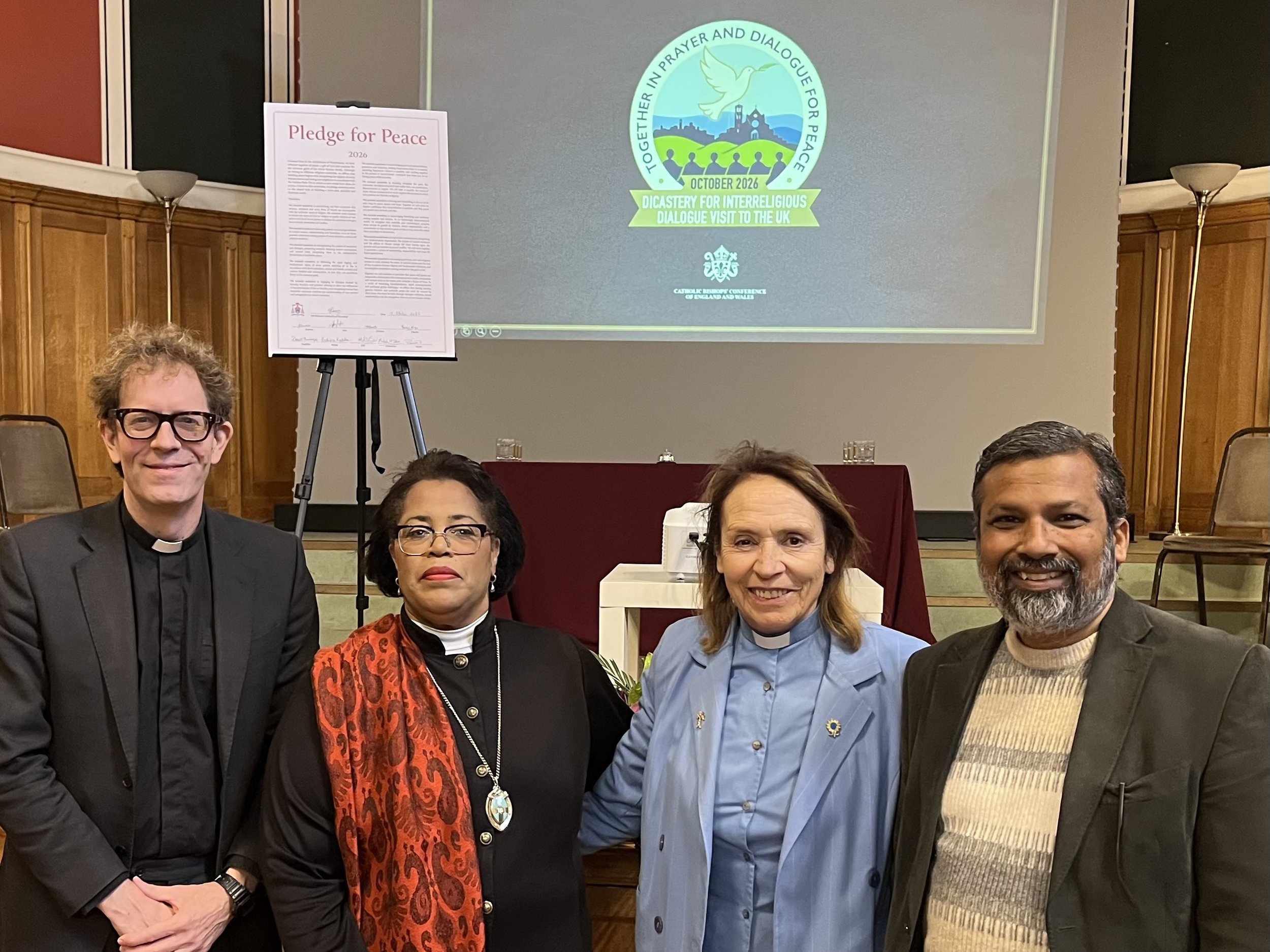
URC (United Reformed Church) representatives at the Westminster Cathedral Hall for Christian Ecumenical & Jewish Gathering, hosted by the Catholic Bishops' Conference of England and Wales as part of the Cardinal George Jacob Koovakad, Prefect of the Dicastery for Interreligious Dialogue visit to the UK
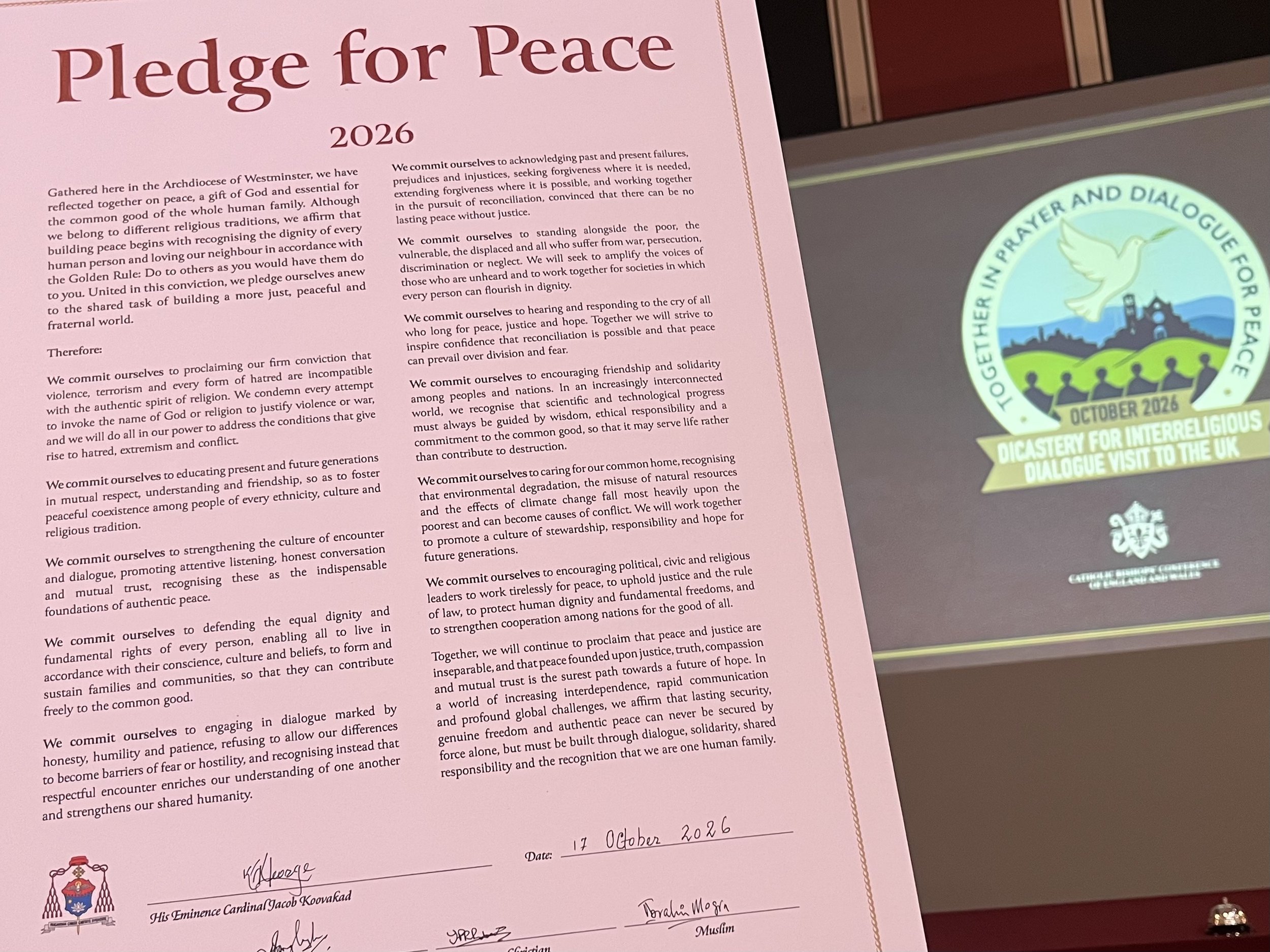
Peace Pledge was signed by representatives of the nine major religious traditions.
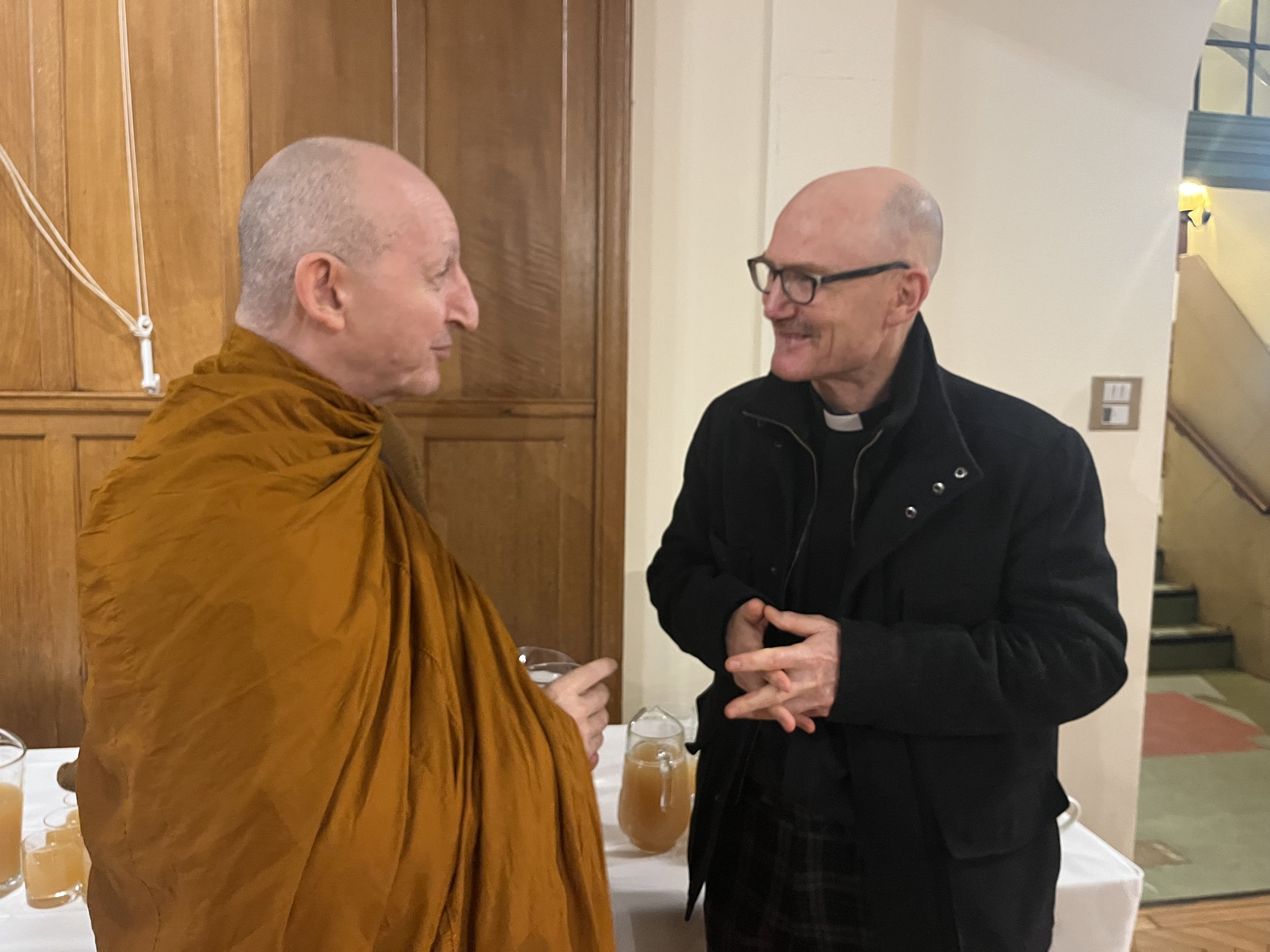
Revd Dr Kevin Snyman (R), URC Head of World Justice and Inter Faith Relations in conversation with Ajahn Amaro, Theravāda Buddhist monk, teacher, and the abbot of the Amaravati Buddhist Monastery